Lower Rates, Higher Bill? What the 2026 Business Rates Changes Mean for Barbershops in England
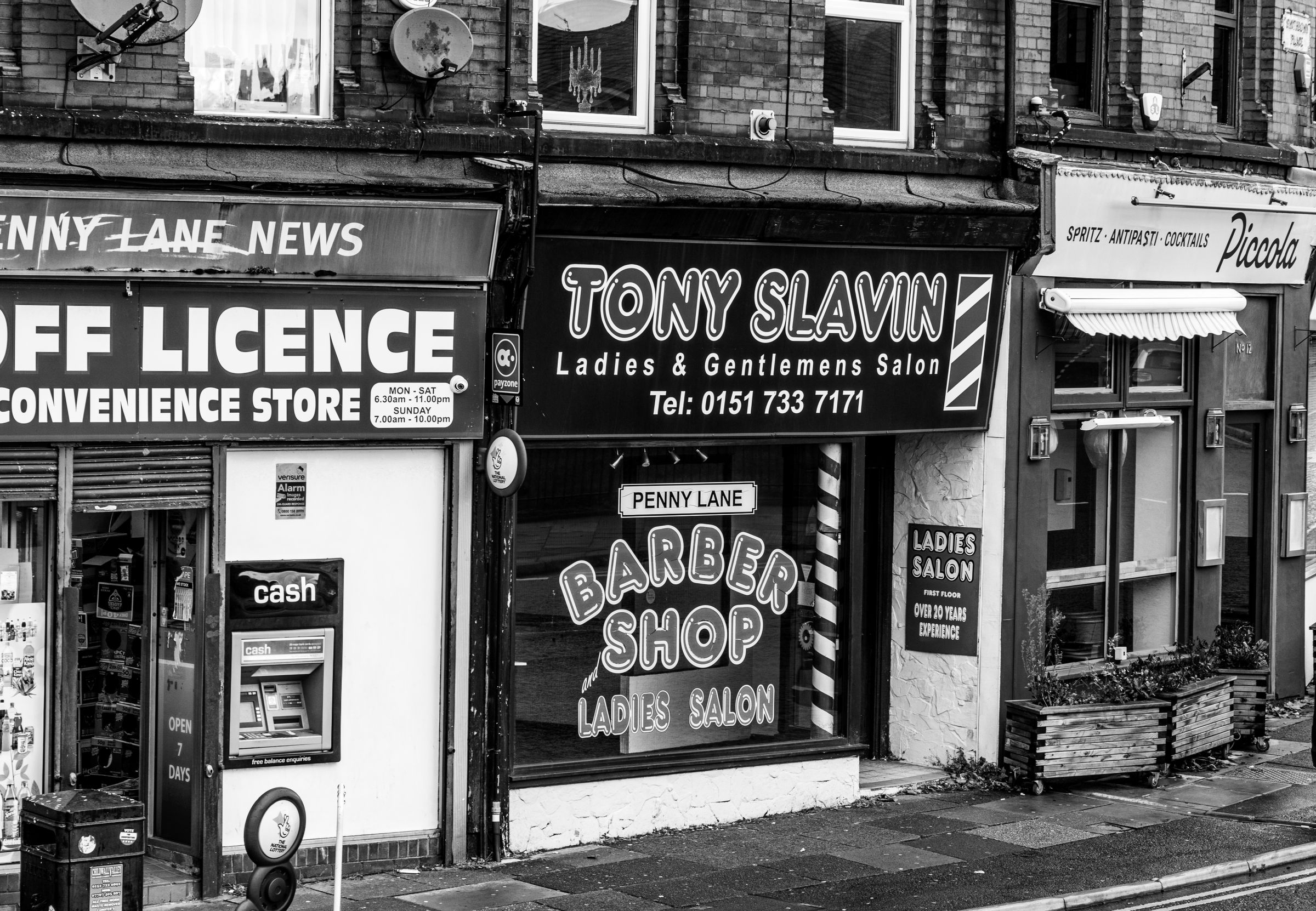
England only. Scotland, Wales and Northern Ireland run their own business rates systems. Figures checked on GOV.UK on 16 October 2026 and revised the same day (v2). All worked figures are illustrative, not a guide to any particular bill.
In April 2026 the government cut the tax rate for shops like yours. For some barbershops, the bill still went up.
Both statements are true, and the gap between them is the useful part. At its simplest, a business rates bill is the rateable value of your premises multiplied by a tax rate, the multiplier, with any relief taken off. In 2026 all of these changed at once, and a one-year supplement was added on top. The headline cut was to the multiplier. Whether your bill rose or fell depended mostly on the other two, and on whether anyone checked that each one is right.
What changed in April 2026
Four things happened together.
First, a revaluation. Every business property in England was given a new rateable value, based on open market rents at 1 April 2024. Values can move in either direction.
Second, new multipliers. Retail, hospitality and leisure properties with a rateable value under £500,000 now have their own, permanently lower rates. For 2026/27, a qualifying property with a rateable value below £51,000 is billed at 38.2p per £1 of rateable value. A non-qualifying property of the same size pays 43.2p. The government’s guidance names “hair and beauty salons (for instance, hairdressers…)” among the services in scope, and makes clear that a business doesn’t fall out of scope just because clients visit by appointment.
Third, the old retail, hospitality and leisure relief ended. In 2025/26 it took 40% off many shops’ bills. The new lower multiplier replaces it, but a 5p cut in the tax rate isn’t the same as 40% off the bill.
Fourth, for 2026/27 only, most properties pay a transitional relief supplement of 1p per £1 of rateable value on top of their multiplier. It helps fund the scheme that limits big bill rises at revaluation. You don’t pay it if your bill is already being limited by transitional relief or by supporting small business relief, which is explained below.
Why some bills went up
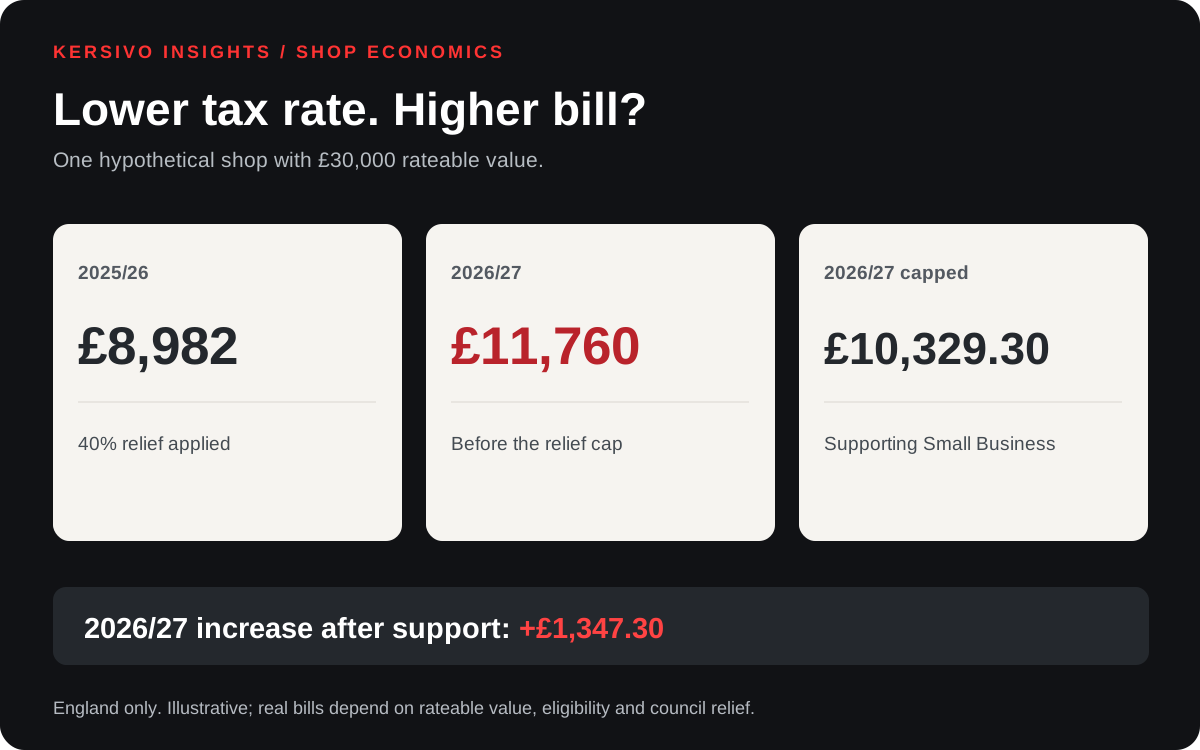
Here is a hypothetical shop, not a real one, in England outside London. Its rateable value is £30,000, unchanged at revaluation. That’s too high for small business rate relief. It took the 40% retail, hospitality and leisure relief in 2025/26 and no other relief.
| 2025/26 | 2026/27 before any cap | 2026/27 after supporting small business relief | |
|---|---|---|---|
| Multiplier | 49.9p | 38.2p + 1p supplement | — |
| Bill before reliefs | £30,000 × 49.9p = £14,970 | £30,000 × 39.2p = £11,760 | — |
| Relief | 40% off: −£5,988 | none | capped (see below) |
| Amount payable | £8,982 | £11,760 | £10,329.30 |
Before reliefs, the bill fell, from £14,970 to £11,760. So transitional relief, which limits rises in the bill before reliefs, doesn’t apply, and the 1p supplement does. But the shop also lost its 40% relief, so what it actually pays would rise from £8,982 to £11,760, an increase of £2,778. The tax rate fell by more than a fifth, and the bill rose.
That isn’t the end of the story. Supporting small business relief is aimed at exactly this case. The government’s guidance to councils says it covers ratepayers seeing large bill increases at revaluation because they lost some or all of their small business rate relief, rural rate relief, the 2023 version of this scheme, or the 40% retail, hospitality and leisure relief. The day-one test is whether the property received one of those reliefs on 31 March 2026. GOV.UK’s summary page describes it as being for bills that have “increased due to revaluation”. The detailed guidance tests eligibility by the reliefs held on 31 March 2026, and then applies the cap only where it lowers the bill. On that reading, our shop qualifies even though its rateable value didn’t change, but your council makes the decision. Charities and community amateur sports clubs are excluded.
For an eligible property, the 2026/27 bill rises by no more than the greater of £800 or the transitional relief percentage cap. That cap is 5% for rateable values up to £20,000 (£28,000 in London) and 15% from there to £100,000. The starting point is what you actually paid on 31 March 2026, after relief. For our shop:
- £8,982 + 15% = £10,329.30
- £8,982 + £800 = £9,782
- The greater is £10,329.30. That’s below the £11,760 it would otherwise pay, so the cap applies. The 1p supplement isn’t added on top.
So the illustrative bill goes from £8,982 to £10,329.30, a rise of £1,347.30 rather than £2,778. The relief can run for up to three years, until the bill catches up with what it would have been without the scheme. In later years the cap is applied to the previous year’s capped bill.
Two cautions. First, councils grant this relief under their own discretionary powers, having regard to the government’s guidance. The government funds it, but your council decides each case. Some councils apply it automatically and others may ask you to apply, so check that your bill shows it. Second, it’s subject to subsidy control limits, which matter only for businesses receiving large amounts of public support. This example is illustrative; it isn’t a statement of what any shop is entitled to.
The lesson is narrow but important. The figure that tells you whether 2026 helped you isn’t the multiplier. It’s this year’s bill against last year’s, with every relief counted.
Three things worth checking
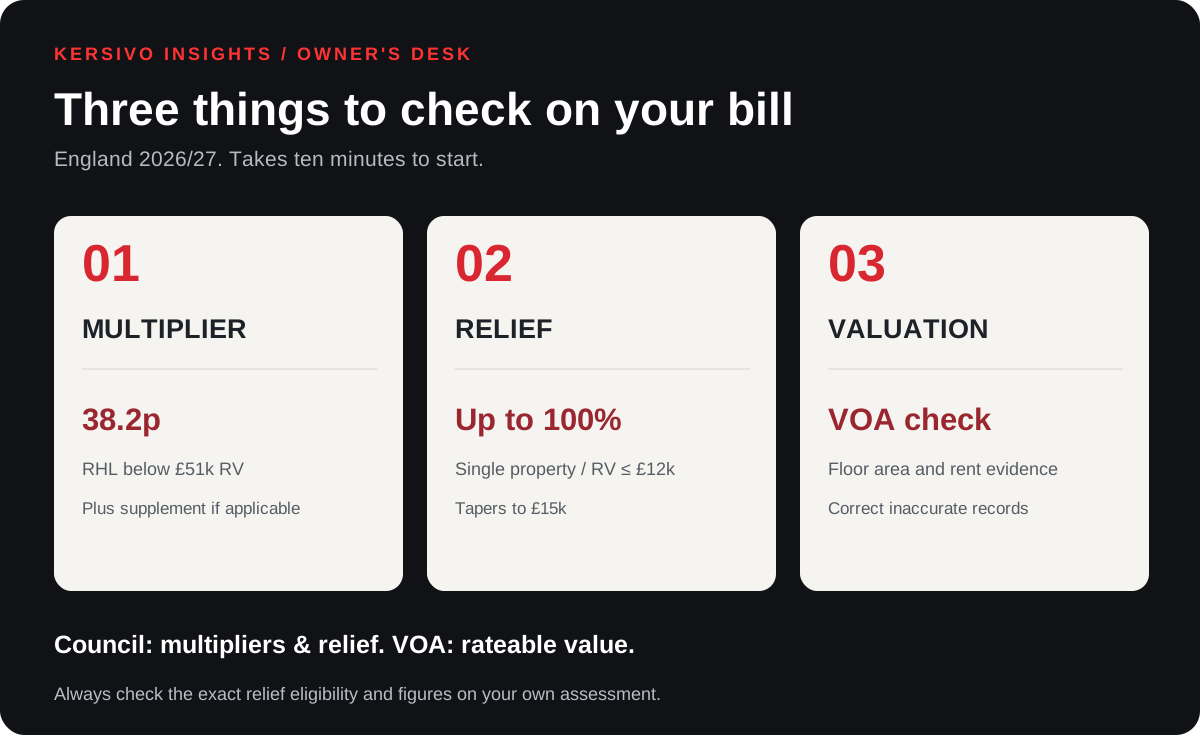
Is your multiplier right? On a property with a rateable value under £51,000, the difference between the qualifying and non-qualifying multiplier is 5p in every pound. On a £30,000 rateable value that’s £1,500 a year before reliefs: £11,760 against £13,260, including the 1p supplement. If your bill is being capped by supporting small business relief, the wrong multiplier may not change this year’s figure, but it affects how quickly the cap runs out, and it matters in full once it does. Your bill shows which multiplier was used. GOV.UK says that if you received retail, hospitality and leisure relief in 2025/26 you will usually be eligible, and that your council can confirm it. A barbershop billed at 43.2p is worth a phone call.
Are you getting small business rate relief? If your business uses only one property and its rateable value is £12,000 or less, you pay no business rates at all. Between £12,001 and £15,000 the relief tapers from 100% to nothing. At a hypothetical rateable value of £14,000, a qualifying shop paying the 1p supplement gets a third off: a £5,488 bill (£14,000 × 39.2p) becomes £3,658.67. If the same property also received relief on 31 March 2026, supporting small business relief may produce a lower figure; your council works out which applies. Shops sitting near those thresholds after revaluation have the most to gain or lose from a small change in rateable value. If you take on a second property, the relief on your main one carries on for a period: 36 months if you got the second property on or after 27 November 2025.
Is your rateable value right? It’s set by the Valuation Office, not your council. You can look up how it was calculated and compare it with similar properties nearby through the Valuation Office’s online service. If something is wrong, such as the floor area or a change to the property that hasn’t been recorded, you can report it or challenge the value through your business rates valuation account. A challenge isn’t worth starting on a hunch. It is worth checking the facts, which takes ten minutes and costs nothing.
Who actually pays
How this matters depends on how the shop is set up.
For an owner-operator or a shop with an employed team, the bill normally goes to the business occupying the premises, so every change lands on the shop’s own costs. It’s a fixed cost: it doesn’t change with how many clients come through the door.
For shops with self-employed chair renters, renters usually don’t receive a rates bill of their own, but the shop’s rates are part of what chair rent has to cover. If your bill has moved by a few thousand pounds, your chair rents may no longer reflect the true cost of the space. Whether and how you pass that on depends on your agreements. It’s a commercial decision, best made with the numbers in front of you rather than at the next rent review by default.
For anyone renting the premises, check your lease. Some leases make rates the tenant’s responsibility in ways that aren’t obvious until the bill arrives.

The case for leaving it alone
It’s fair to say most owners don’t need to do anything. If your bill is zero because of small business rate relief, there is little to check. If your bill fell, you may reasonably decide the time is better spent on clients. And challenging a rateable value without evidence can waste time, because the valuation is based on rental evidence you won’t easily beat.
That’s all true. But the checks above aren’t a challenge. They’re a five-minute reading of your own bill against public rules. The point isn’t to fight the system. It’s to make sure you’re paying the rate the system says you should.
The decision
Get out your 2026/27 bill and last year’s. Compare the totals, not the multipliers. Check that the multiplier is 38.2p (or 43p if your rateable value is £51,000 or more), plus the 1p supplement unless a cap applies, that any small business rate relief you’re entitled to is shown, and that your rateable value looks right against similar shops nearby. If anything doesn’t fit, call your council about reliefs and the Valuation Office about the value. If everything fits, you’ve spent ten minutes confirming a fixed cost that will be with you every month until the next revaluation.
References (checked 16 October 2026; items 9–10 added in v2)
- GOV.UK, Estimate your business rates (2026/27 multipliers) — https://www.gov.uk/estimate-your-business-rates
- MHCLG, Business Rates Multipliers: Qualifying Retail, Hospitality or Leisure (updated 30 March 2026; hair and beauty salons in scope) — https://www.gov.uk/guidance/business-rates-multipliers-qualifying-retail-hospitality-or-leisure
- GOV.UK, 2/2026: Notification of Non-Domestic Rating Multipliers for 2026/27 — https://www.gov.uk/government/publications/22026-notification-of-non-domestic-rating-multipliers-for-202627/22026-notification-of-non-domestic-rating-multipliers-for-202627
- HM Treasury, Effects of the business rates RHL multipliers and high-value multiplier (Table 2.A) — https://www.gov.uk/government/publications/effects-of-the-business-rates-retail-hospitality-and-leisure-multipliers-and-high-value-multiplier/effects-of-the-business-rates-retail-hospitality-and-leisure-multipliers-and-high-value-multiplier
- GOV.UK, Small business rate relief — https://www.gov.uk/business-rates-relief/small-business-rate-relief
- GOV.UK, Supporting small business relief — https://www.gov.uk/business-rates-relief/supporting-small-business-relief
- GOV.UK, Business rates revaluation — https://www.gov.uk/introduction-to-business-rates/revaluation
- GOV.UK, Find a business rates valuation / correct your business rates — https://www.gov.uk/correct-your-business-rates
- MHCLG, Business Rates Relief: 2026 Supporting Small Business Relief, local authority guidance — https://www.gov.uk/government/publications/business-rates-relief-2026-supporting-small-business-relief-local-authority-guidance/business-rates-relief-2026-supporting-small-business-relief-local-authority-guidance
- MHCLG, Business Rates Information Letter 5/2025 (multipliers 2026/27; transitional relief, the 1p supplement and SSB relief) — https://www.gov.uk/government/publications/52025-confirmation-of-budget-package-and-the-non-domestic-rating-multipliers-for-20262027/52025-confirmation-of-budget-package-and-the-non-domestic-rating-multipliers-for-20262027